
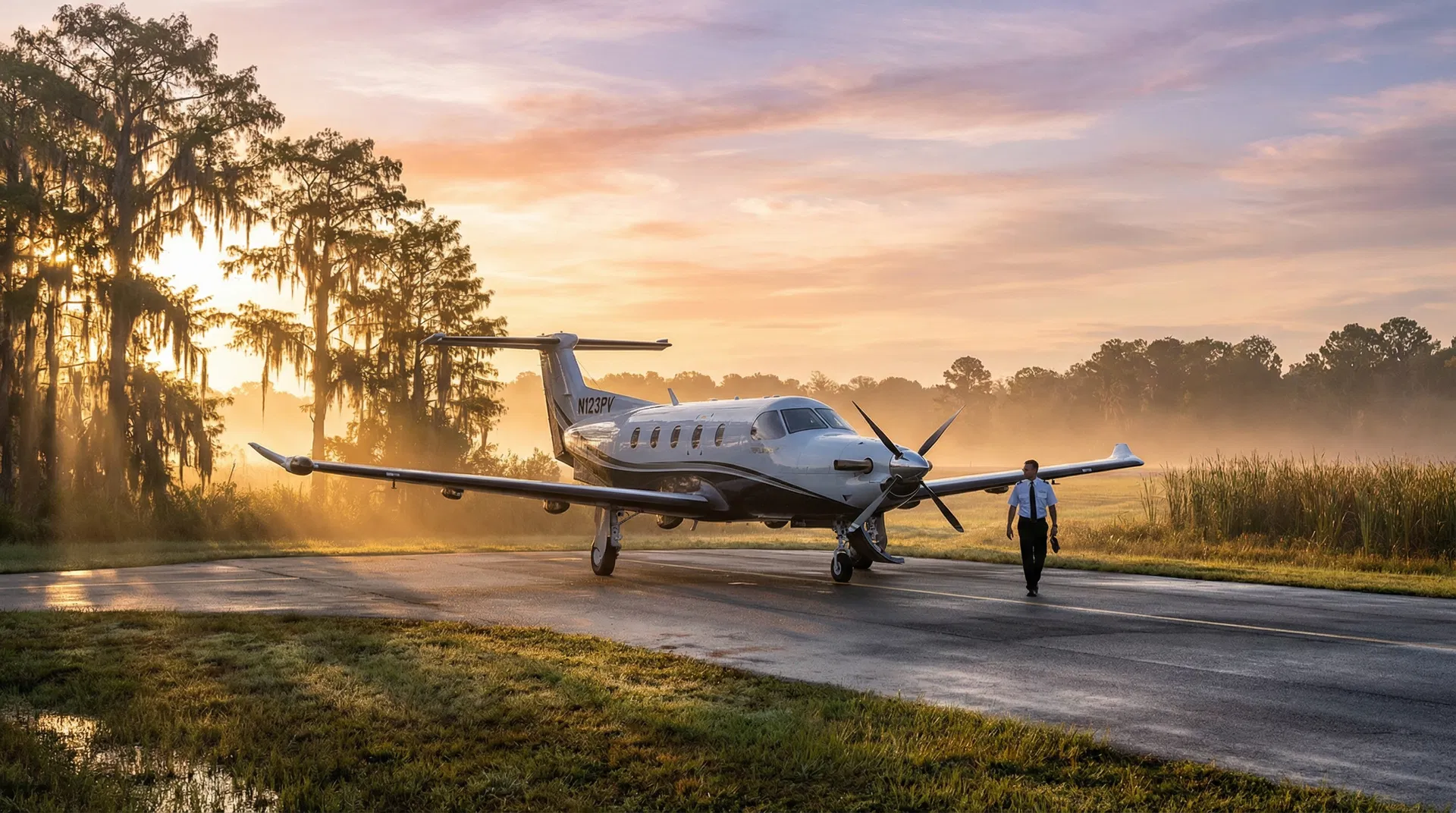
The private aviation industry is projected to reach $41.38 billion by 2030, with North America commanding 70% of the global fleet. Understanding these macro trends is essential for investors evaluating aviation real estate.
The private aviation industry is not a niche. It is a $339 billion economic engine that supports 1.3 million jobs across the United States, according to a PwC study published in February 2025. When you add the $6.6 billion that private aviation users contribute to U.S. travel and hospitality, the picture that emerges is of an industry deeply woven into the fabric of American commerce, wealth, and lifestyle.
For investors evaluating Shepard's Landing, these macro numbers matter because they define the size and stability of the buyer pool.
The Growth Trajectory
Industry projections place the private aviation market at $41.38 billion by 2030, with North America commanding approximately 70% of the global private aircraft fleet. Private aviation activity grew 4.5% in 2026, continuing a trend of steady expansion that has persisted through economic cycles. The United States alone is home to more than 500,000 active private pilots, a figure that has grown by approximately 23% between 2019 and 2024 as post-pandemic interest in personal aviation surged.
This is the demographic that Shepard's Landing is built for. Not the casual aviation enthusiast who rents a Cessna on weekends, but the aircraft owner — the entrepreneur, executive, or professional who has made a significant investment in their own aircraft and needs a home that reflects and supports that investment.
The Infrastructure Gap
Despite this growth, the infrastructure supporting private aviation has not kept pace. As documented in our analysis of the hangar shortage, 71% of general aviation airports are experiencing a shortage of individual hangars (AOPA). The FAA has ranked hangar construction 31st out of 32 eligible funding priorities. Public airports are not building the capacity that the market demands.
This infrastructure gap is not a problem for Shepard's Landing — it is the opportunity. A private aviation community with 28 dedicated hangars, 17 hangar homes, and a private runway is not competing with public airports. It is offering something that public airports structurally cannot: guaranteed, permanent, private aircraft storage integrated with luxury residential living.
The PwC Economic Impact Study
The February 2025 PwC study on U.S. private aviation's economic impact deserves particular attention. The finding that private aviation users contribute $6.6 billion to U.S. travel and hospitality reflects the spending power of the demographic. These are not budget travelers. They are high-net-worth individuals who choose private aviation specifically because they value their time, their privacy, and their ability to operate on their own schedule.
These are exactly the buyers who will pay a premium for a home at Shepard's Landing — not because they have to, but because it is the only property that truly serves their lifestyle. The community is not just a real estate investment. It is infrastructure for a way of life that this demographic has already chosen and is actively seeking to optimize.
Review the full investment opportunity in our executive summary or register for our upcoming investor webinar to learn more.
Sources: PwC, "The Economic Impact of U.S. Private Aviation," February 2025; Flycraft.com aviation statistics, 2026; AOPA Airport Support Network Survey, 2021; Aviation Week, December 2023.